

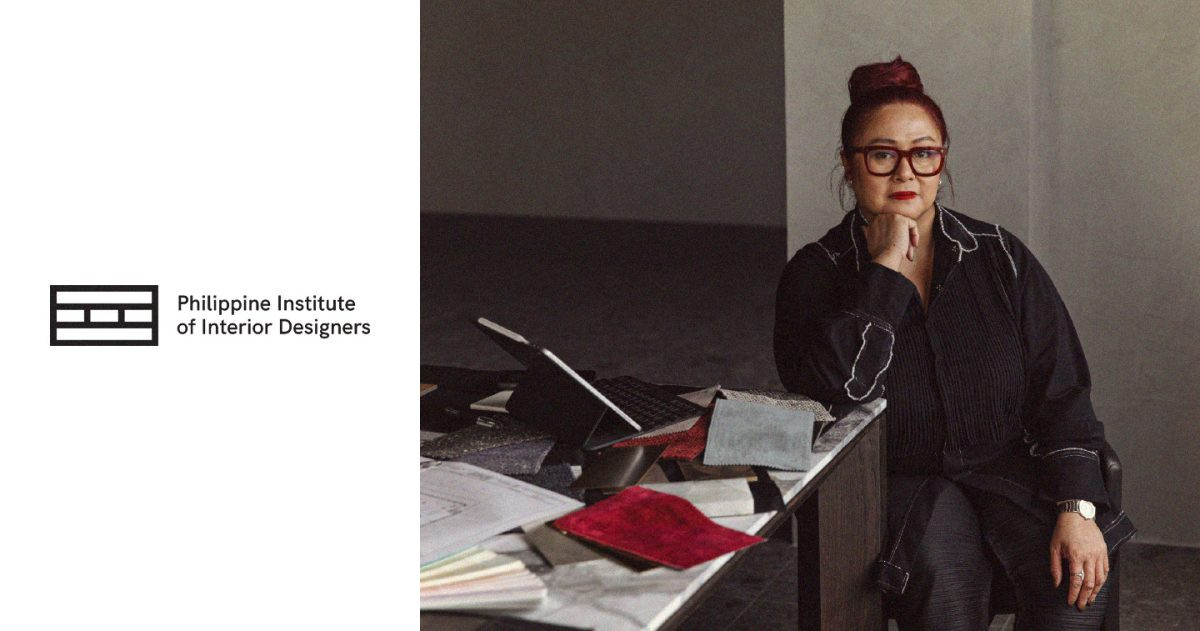
MANILA, PHILIPPINES – As the newly elected president of the Philippine Institute of Interior Designers (PIID), Cecil Ravelas is helping to shape and define the role of design as a tool for healing.
Healing spaces from the start
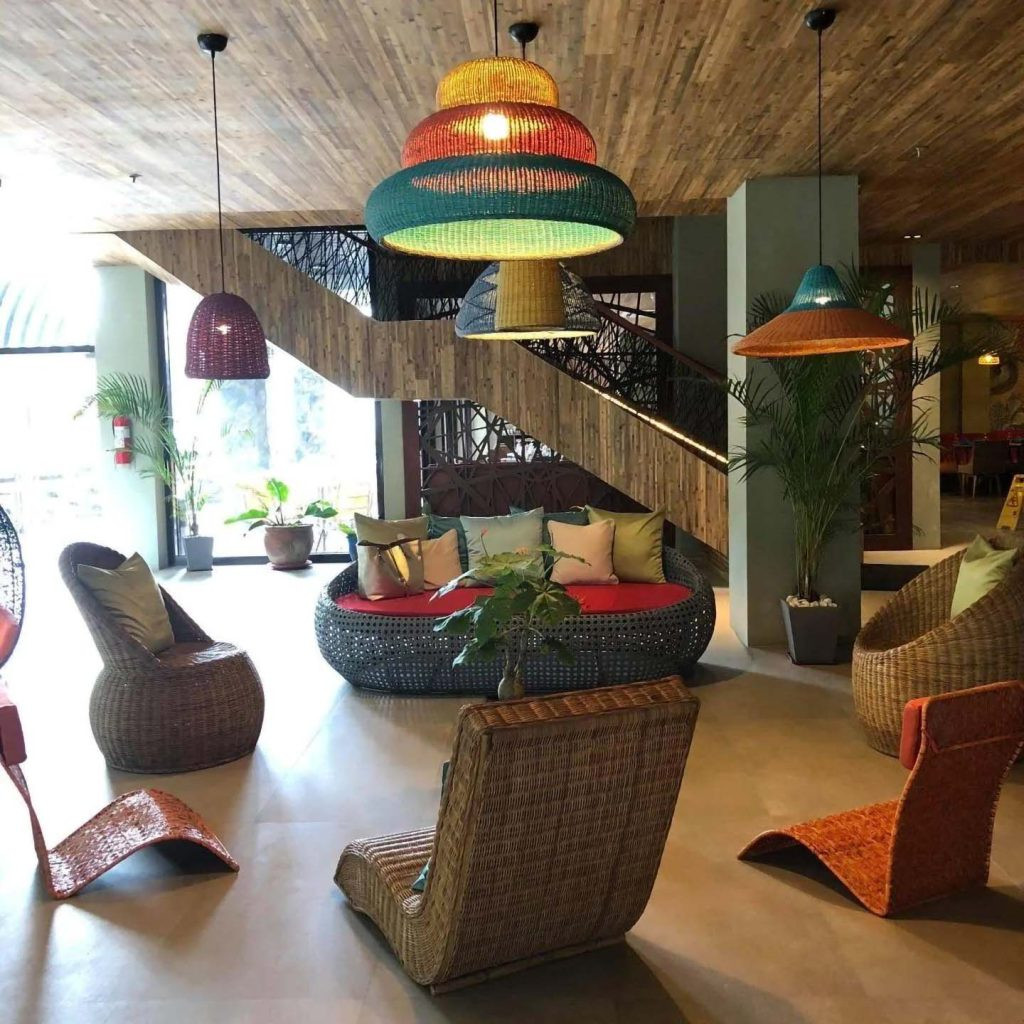
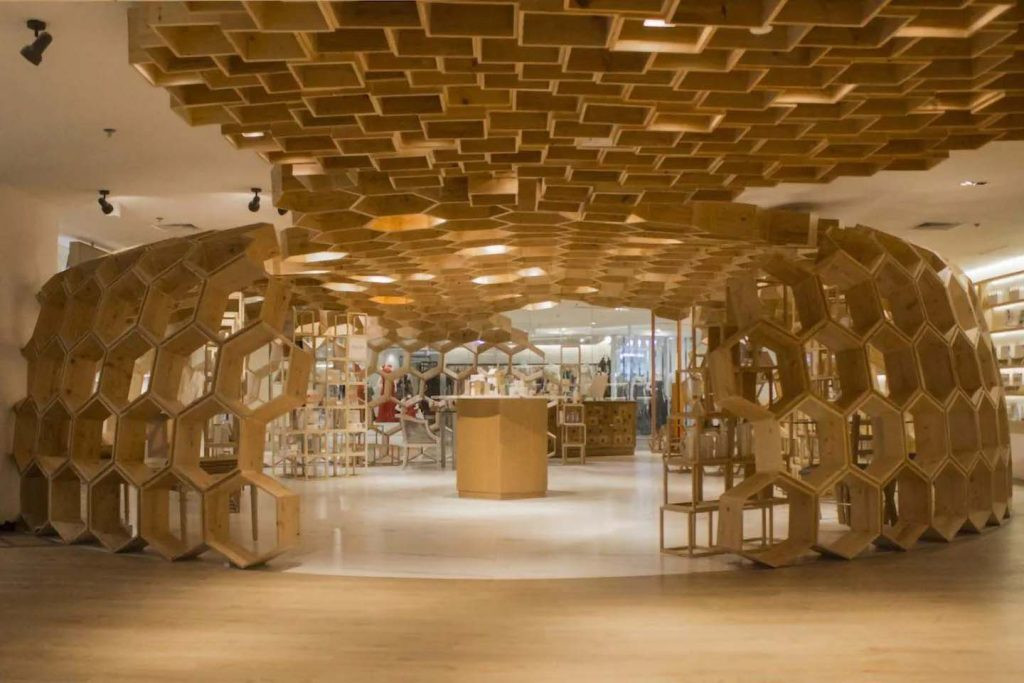
IDr Cecil Ravelas has been intuitively designing quiet spaces since the late 90s. Her style is not minimalist in the strict sense of the word. She is adept at exploring texture and color as seen in many of the retail and hospitality spaces she has designed. “I see color and texture as emotional materials,” Cecil shares. “They define the psychological temperature of a space, and offer subtle cues of comfort and grounding.” She often threads the line between contemporary restraint and warmth, utilizing stone, wood, weaves, textured neutrals and soft metallics to create a familiar sense of home.
Although she relates deeply to the spirituality found in John Pawson’s work, Cecil’s projects are not purely monastic, Even then, many from her earlier years may suggest otherwise. She has built private chapels, rectories, and retreat houses across the country. She would later reflect on this phase in her career as a prelude to the bigger purpose that awaits her as a designer: to create healing spaces.
Under her own design firm, RED Interior Design, Cecil’s growing portfolio of luxury residences, hospitality, and retail spaces all echo a visual language that is decidedly quiet, restorative, and balanced. “Intuitively, I’ve been building healing spaces. But for a long period of time, I couldn’t fully identify or characterize my style,” she recalls. “Clients would always tell me that the spaces I’ve designed for them carry a profound sense of balance and inner peace.” The very same codes are apparent in the commercial spaces she builds, allowing brand narratives to shine through in a manner that’s authentic, rooted, and well-considered.

Healing silence meets art, light, lines, color, curvature
Cecil’s home at the heart of Makati CBD is the paragon of quiet healing amidst the frenetic pace of the city. Walls are bare except for a monochromatic painting by Lui Medina. “Art is never an afterthought,” she says. “It’s personal. An anchor of identity. When I choose art for a client’s space, I plan it through a series of unrushed conversations. Art must speak to the dweller who will live with it everyday. When art is chosen through co-creation, it becomes more than decorative. It is memory, meaning, and a presence in one’s home.”
Like color and texture, she regards lighting as emotion. “It is crucial to the depth of the design story,” Cecil emphasizes. Having worked in theater, she is heavily influenced by dramatic lighting schemes: wall and floor-mounted lights that sculpt shadows, highlight textures, and create visual rhythm. “Drama has to be anchored on function and respond to the life of the space–movement, reset, moments for entertaining, moments for rest. I layer light the way one layers mood.”
Pieces in her home were collected over time, each one representative of the various chapters in her journey as a designer. A purple sofa, and a mid-century Bertoia Bird Chair by Harry Bertoia (for Knoll) surround a low black oval coffee table. Atop it, a marble bowl designed by her design hero: John Pawson. The three-part ensemble contrasts beautifully with a dining area that emphasizes the lightness and simplicity of wooden benches and rectangular dining table.
Cecil reflects on her unique ability to blend light, lines, color, and curvatures with restraint: “These are contrasts that I like to play with. Structure meets soul. Linear geometry establishes discipline, rhythm, and clarity while curves soften the space and invites emotional openness. Lines structure the mind while curves open the heart. The interplay creates harmony, a quiet tension between precision and flow.”
Healing and integration
Cecil’s bedroom is configured with an ensuite Zen rock garden, a personal sanctuary for silence and stillness. It is a feature in her home that accurately captures where she is in her own healing. “After the Sovereign Soul retreat in Ubud, Bali with Lia Bernardo and Malou Araneta, I came to the realization that my calling as a designer has always been to do projects with purpose and meaning.”
While quiet healing has always been a part of Cecil’s design DNA, her personal path towards renewal and restoration has inspired clarity. It has also empowered her to find her voice and define her purpose as a designer. “It became more clear to me how I could integrate the concept of healing into my practice, expanding my sensibility beyond aesthetics,” she intimates. For Cecil, it’s no longer designing for design’s sake.
SAMA Sanctuary, a newly opened wellness space located in Legaspi Village, Makati, is the very embodiment of this vision. “It was very collaborative between myself and the owners. Whereas everything used to be intuitive, now there is more intention in the way I create spaces. I am now more conscious and attuned to the energy of the space,” she shares. Beyond form, ornamentation, or aesthetic, she is inclined to tune into the intangibles that breathe character and personality to a space.
A new chapter inked with purpose: A sustainable design community
It also comes as no coincidence that only a year after her spiritual awakening, Cecil was elected president of the Philippine Institute of Interior Designers (PIID). She welcomes this new role as a calling to carve out change and create positive impact within and beyond the design community.
Rooted in the integration of healing with practice, sustainability headlines Cecil’s campaign as the new head of the organization. Now more than ever, she is inclined to harness design as a conduit for reconnecting with nature. “In today’s world, how do we build spaces that restore?” she ponders and answers: “Nature. Nature holds all the answers.”
In Cecil’s more recent projects, the use of natural, locally-sourced materials like terracotta, bamboo and limewash has taken center stage. “There are so many other materials to explore,” she states. “I would like to keep lobbying for sustainable design as a standard, not just an option. I always encourage clients to add features in their homes that support a more sustainable way of life–water and energy saving mechanisms, designated areas for rain water collection, intelligent lighting, better insulation, just to name a few.”
She admits that at the onset, sustainable design may appear costly, but immediately counters that, “This is where the creativity and resourcefulness, especially of Filipino designers, come into play.”Cecil’s extensive background in construction and as a project manager has sharpened her technical-know. “This is why I am also able to reverse engineer and create sustainable solutions for various projects,” she explains.
The newly-elected president is also determined to continue the upskilling workshops and training programs started by the outgoing board. “Developing technical know-how is important for deepening our craft as designers. This is what will allow us to raise the level of professionalism. It’s no longer just about compliance so we can practice. It’s building competence.”
Innerwork and conscious leadership are defining pillars of Cecil’s leadership at the PIID. During the campaign, her conversations with younger designers were heavily focused on wellbeing and how it relates to performance as professionals in a creative industry. “They would often ask me about how to manage difficult clients, stress, and the pressures of deadlines,” she recalls. “Innerwork is an important tool for navigating the profession in a healthy way.”
The task of a designer extends way beyond the building of living spaces. “We are all called to lead as designers.,” Cecil introspects. “To spark conversations on mindful thinking and design not just among us in the practice but also for our clients. Every space that we co-create with our client holds the potential to heal. Every project that we are presented with is an opportunity to respond to the call of the times.”