

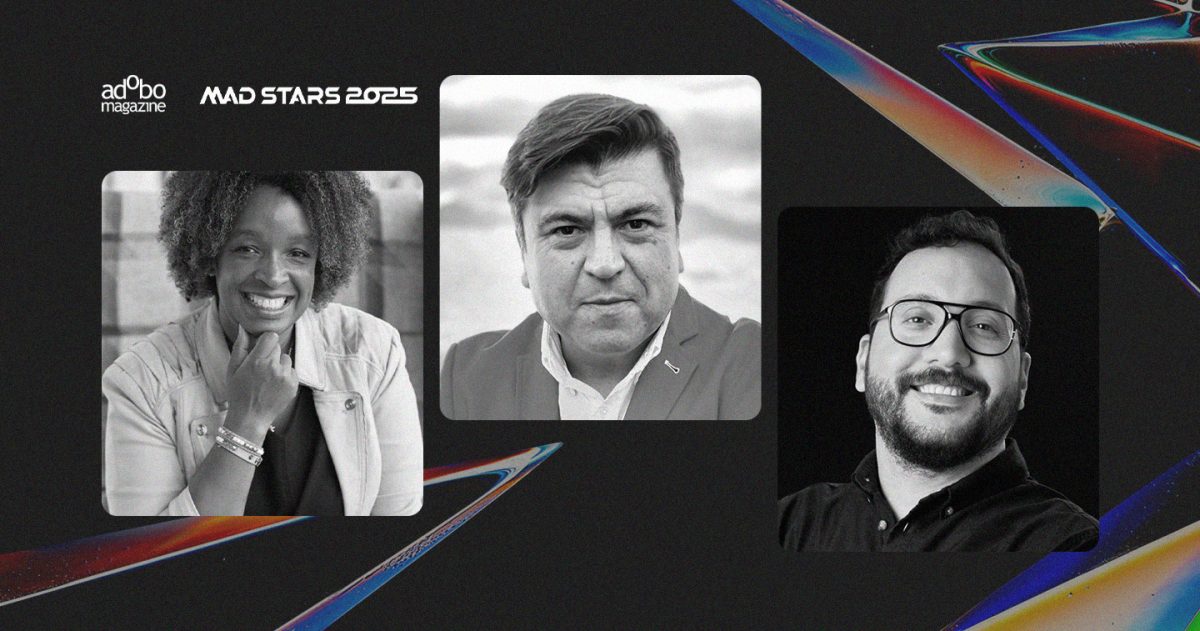
BUSAN, SOUTH KOREA – At MAD STARS 2025 in Busan, held on August 27–29, conversations revolved around one force reshaping the industry: artificial intelligence. Panel discussions and keynote talks explored how brands, agencies, and creatives can wield artificial intelligence to accelerate growth and invention.
However, the heart of the three-day creative festival beats in the judging rooms, where the year’s most daring campaigns from across the globe were carefully assessed and evaluated by a distinguished panel of creatives and business leaders.
In exclusive one-on-one interviews, adobo Magazine drew out their thoughts on this year’s entries and their indicator if a work is groundbreaking and has a story to tell.
From amazing to groundbreaking
Tawana Murphy Burnett of Meta, who judged the Outdoor, PR, Brand Experience & Activation, Media, Place Brand, and Commerce categories, says a campaign crosses from “amazing” to “groundbreaking” when it sparks real-world impact.
“There are many campaigns that do a great job of telling a story and they even move you emotionally,” she noted, “but then there are some that take action in society … it actually evokes real change, change in either behavior of people or perhaps in government.”
For Inbrax Worldwide Chief Creative Officer Pancho Gonzales — jury member for Interactive, Mobile, Data Insight, Social & Influencer, Integrated, and Innovation — craft and connection seal the deal.
“It has an animation execution… something that really connects with the audience,” he explains. And there’s an extra gut check: “If I’m jealous of an entry and that jealousy continues around the judging journey, it really, really deserves to be at least a Gold or even a Grand Prix.”
Trends and patterns observed
Cheil Europe Creative Chairman Alejandro Di Trolio, who judged Interactive, Mobile, Data Insight, Social & Influencer, Integrated, and Innovation, noticed a clear step up in both polish and perspective.
“This year is even more professional in terms of the projects submitted,” he said, adding that a surge of Asian entries brought “the Asian perspective, competing with the global,” which he found especially exciting.
Pancho saw health as the dominant theme. Many of the most compelling ideas, he observed, addressed wellness or medical needs and carried the potential to scale far beyond their home markets. Creatives, he stressed, can “do something bigger” than sell products by linking brands with people in ways that deliver tangible results — if those ideas find the right support to expand internationally.
Tawana focused on the battle for attention. “Everyone is trying to earn attention,” she noted, and in today’s swipe-up environment, a piece has just a few seconds to hook an audience. Whether through a surprising first action or a millennial pause, work must now prove itself instantly.
Best campaigns
When asked which entries stayed with them long after judging, Tawana highlighted VML Thailand and Whoscall’s “Scammer Pages,” a government-backed drive to warn citizens about the scale of phone scams. “It’s not the sexiest topic,” she admitted, but the team’s “audacious move of literally slamming a 1,500-page phone book” made the threat impossible to ignore.
Inspired by the classic Yellow Pages, the campaign turned that hefty directory into a stark visual metaphor, urging Thais to stay alert and to “Download Whoscall” if they couldn’t avoid every suspicious call. The result, Tawana said, “really garnered PR, earned media attention and partnerships,” taking it from important to unmissable.
Pancho’s pick was GIGIL Manila’s “Michelle Lyn,” a playful twist on the Michelin Guide’s arrival in the Philippines. As the famous French reviewing body prepared to hand out its coveted stars, Filipinos speculated which restaurants might earn the honor.
Chinese hotpot spot Jiang Nan decided to have fun with the frenzy, finding a diner whose name sounded almost identical to the guide itself — Michelle Lyn Espiritu — then inviting her to eat and post her verdict. Her five-star Google review gave the restaurant its own “Michelin” moment. “It’s quite simple … a very smart way of using social,” Pancho said, calling it “an amazing sample of what social media is,” and the kind of idea he hopes to see spread “at MAD STARS or any other part of the world.”
For Alejandro, it’s Wolf BKK’s “Uncle KFC Rice Bowl” campaign that has captured his attention from start to finish.
“It’s an amazing campaign because it uses humor as a connector of people and brand..and it also has this kind of humanity that we really need in these times,” he shared.
Wolf BKK and KFC Thailand’s campaign disrupts the global franchise norm by reimagining the iconic Colonel Sanders as a beloved “Uncle,” aiming to provide a familiar, feel-good, homey experience that resonates deeply with Thai culture and lifestyle.
How do we know if a work has a story to tell?
Alejandro believes the most compelling work begins and ends with humanity. “It’s not only technology by technology,” he said, but the fusion of “humor on one side, technology on one side, but with the same purpose … that connects with people in a deep way.”
Tawana agrees that a human spark pulls audiences in first. “There’s a human element … that gives you that sense of relatability right away,” she noted, whether it’s “an audio cue” or “the sound of a voice” that makes you want to know more.
Pancho looks for what he calls a “vertical takeoff” — an opening that surprises so completely you forget you’re watching an ad. From there, he prizes ideas that develop seamlessly across channels, “taking care of different touch points” and ending with “a great finale … an unexpected finale.”
Together their lens is clear: technology and craft matter, but it’s the immediate human connection that turns a story into something unforgettable.
How should agencies and creatives learn to step it up on the global arena?
Tawana urges agencies to start with absolute clarity: define the problem you’re solving and own it with an unmistakable voice.
“Why is this brand telling that story, and why is it uniquely owned by that particular brand or that community or that company?” she asked. Whether you choose humor or serious craft, she said, the work must feel like something only that brand could pull off.
“Burger King could do that thing … maybe another brand could not,” she noted, adding that sharp storytelling and consistent execution are what elevate local ideas to the global stage.
Pancho takes a different angle, arguing that distinct cultural perspective is a strength to lean into, not sand off. “You don’t need to learn things from other regions, because you have a lot of value in your own culture,” he said, noting how places like Asia Pacific, Africa, and Latin America “see things differently,” which juries are hungry to celebrate. While strong execution and a well-structured case study remain essential, Pancho believes agencies shouldn’t chase Western formulas. “It’s not the time anymore to follow rules,” he stressed, only to adapt the presentation when needed so the unique point of view shines through.
MAD STARS 2025 showcased a creative landscape that’s sharper and more fearless, with polished work and a strong Asian presence. Jurors saw ideas mixing humor, humanity, and technology while tackling urgent themes like health and safety, all demanding attention in just seconds before unfolding with craft and surprise.
According to the jury, the formula for unforgettable work is clear: define the problem, tell a story only your brand can own, and spark real change.
adobo Magazine is an official media partner of MAD STARS 2025.